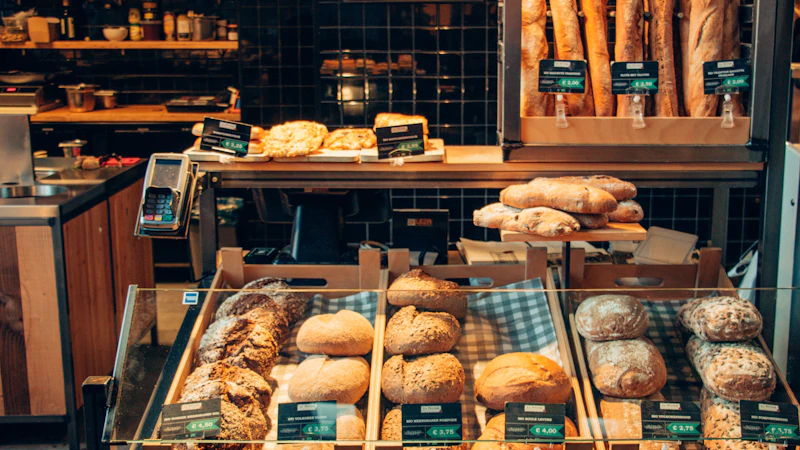
The Saudi Bakery Industry
Saudi Arabia's bakery sector is substantial and growing, driven by a young population, urbanisation, and a food culture where bread and baked goods are daily staples. From traditional khubz bakeries to modern patisseries offering French-style pastries and celebration cakes, the sector ranges from artisan single-location shops to chains with 10–50 outlets across major cities.
The chains face a specific operational model: central production (one or two facilities making the products) feeding multiple retail outlets. This model requires coordination between production, logistics, and retail that manual paper-based systems cannot handle reliably above 5–10 outlets.
Central Production to Branch Distribution
In a central production model, the main kitchen produces batches of bread, pastries, and cakes to a daily production plan. These are distributed to retail branches early each morning. The challenge: knowing how much each branch needs, producing the right quantity at the right time, and tracking what was sent versus what was received.
OneScale's production planning module works from branch order submissions. Each branch manager enters their projected daily requirements the evening before. The central kitchen sees consolidated production targets for each product. After production and dispatch, the system records quantities sent to each branch — creating an inter-branch transfer record that both central and branch managers can see.
Branch-Level Stock Monitoring
At the retail branch, sales are recorded against the stock received from central production. End-of-day reports show: opening stock (what arrived), sales made, closing stock (what remains), and waste (the difference if it exceeds expected returns). This data feeds back to the central production team for the next day's planning — creating a data-driven production cycle instead of a guess-based one.
Branches that consistently have surplus at day-end receive slightly reduced deliveries. Branches that regularly run out of specific items receive more. Over two to three weeks, this calibration significantly reduces both waste and stock-outs.
Ramadan Operations
Ramadan fundamentally changes bakery demand in Saudi Arabia. Consumption patterns shift to evening and pre-Suhoor periods. Specific products — dates-based pastries, special Ramadan breads — see demand spikes of 200–400%. Standard production quantities become irrelevant in Ramadan's first week.
OneScale's sales history allows production planners to review the previous Ramadan's daily sales by product and by branch — providing an empirical basis for production planning rather than estimation. The system's promotional pricing module also handles Ramadan special pricing automatically across all branches, without requiring each branch to manually update their price lists.
Staff and Shift Management Across Locations
Saudi bakery chains typically run on shifts covering early morning (production), daytime (retail peak), and evening operations. Staff scheduling across multiple locations, tracking attendance, and calculating wages based on shift hours is a significant administrative task without a system.
OneScale's HR module handles shift scheduling, attendance recording, and wages calculation by staff member across all branches — producing a consolidated payroll report that accounts for staff working across multiple locations in the same period.
ZATCA Compliance Across All Outlets
Each retail outlet in a Saudi bakery chain is a separate sales point that must produce ZATCA-compliant e-invoices. OneScale's invoicing is ZATCA-compliant across all branch terminals — the same TRN and compliant receipt format applies everywhere, maintaining regulatory compliance without additional configuration per branch.
Conclusion
A Saudi bakery chain that operates on manual coordination between central production and distributed retail is leaving significant efficiency on the table. The data already exists — production volumes, delivery records, branch sales — but without a connected system, it cannot be used. With centralised management through OneScale, the same data becomes the foundation for daily decisions that reduce waste, prevent stockouts, and maintain consistent quality across every outlet.